
Analyse your debts
We assess liabilities, creditors, income, assets and personal liability risks.
For entrepreneurs, self-employed professionals and private individuals with substantial liabilities, EU insolvency offers a significantly faster route to debt relief. We assess your situation and personally guide you throughout the entire process.

01 / EU insolvency
You have built a livelihood. Taken responsibility. Accepted risks. Perhaps things have turned out differently than planned. What matters is not what lies behind you - but how quickly you can regain the freedom to act financially.
EU insolvency may be the right step for precisely this: organising liabilities, ending creditor pressure and creating a clear fresh start. Procedures differ considerably across the EU, particularly in duration, income and discharge of debts.
We assess liabilities, creditors, income, assets and personal liability risks.
We compare the available procedures and assess which route is fast, legally sound and financially sensible.
We guide you through the process with a clear goal: the fastest possible debt relief and financial freedom to act.
We assess with you which country could be suitable for your debt relief.
Understand your options
What matters is a procedure that fits your actual circumstances, rather than a promise of the shortest duration.
Six countries at a glance. The right procedure depends on your circumstances.
From adjudication. Income contributions may last up to 3 years; extensions are possible. Legal source
The asset realisation phase comes first. The plan depends on income, repayment rate and remaining debt; extensions are possible. Legal source
From the opening of proceedings, including the good-conduct phase. Certain repeat proceedings have a 5-year period. Legal source
Payment plans last 3 years, or 5 in specified statutory cases. Liquidation and no-asset proceedings have no single statutory total duration. Legal source
New consumer applications after 16 July 2026 generally require 5 years from the final decision initiating the assignment procedure. Earlier proceedings add time; transitional cases and other debt relief routes need separate assessment. Legal source
No fixed debt-free deadline: unpaid claims may remain as certificates of loss. New assets may allow creditors to pursue collection again, subject to the legal conditions. Legal source
These are statutory standard periods for the named phases, not a promise of total completion time. Preparation and establishing your centre of interests take additional time. Discharge requires the applicable conditions to be met; not every claim is covered. As of September 2026.
| Country | How long does the insolvency procedure take? | Which types of debt are covered? | What is the protected income threshold? | What happens to existing assets? | Requirements |
|---|---|---|---|---|---|
| Ireland | Normally 1 year | In principle, all debts, including tax debts, bank debts, debts arising from piercing the corporate veil and tort debts. Court-imposed fines and maintenance claims are not covered by insolvency. | €3,284.67 in one of the official ISI examples (basic allowance + €1,400 housing + €500 childcare + other living costs). The amount may be higher or lower depending on housing costs, family and individual circumstances. The Irish system considers the actual personal and family situation. There is no fixed attachment threshold. | Realisable assets generally form part of the insolvency estate; statutory exemptions and individual assets must be assessed separately. In some circumstances, it may even be possible to retain the family home. | Actual COMI in Ireland, but no minimum stay measured in days. Insolvency is possible with debts from €20,000, with no upper limit on income or debt. |
| Spain | Usually 3 years, in some cases 5 years | Tort claims are not covered; tax debts only to a limited extent. Exceptions also apply to certain public claims, maintenance and other preferential claims. | €1,221 per month or €17,094 per year (monthly allowance × 14) is generally protected from attachment in 2026. Above the statutory minimum wage, progressive attachment rates apply. | Depending on the debt relief route, assets may be realised; under certain conditions, the main home may be retained. | Actual centre of life in Spain. Personal eligibility requirements for discharge must be met, along with duties of cooperation and procedural obligations. |
| Latvia | Depending on the case, approximately 6 months to 3 years | After successful completion of the discharge plan, the remaining debts covered by the procedure are generally discharged, but there are numerous statutory exceptions. | At a minimum wage of €780, at least €520 of monthly income remains on a calculated basis. During the discharge plan, generally at least one third of net income must be paid to creditors; the minimum payment is €260 per month. | Attachable or realisable assets are generally realised; legally protected items remain exempt. | At least 6 months as a Latvian taxpayer and, in principle, insolvency. Debts due normally exceed €5,000, or foreseeable liabilities exceed €10,000. |
| Germany | Normally 3 years, with preparation and follow-up 4-5 years | Insolvency claims, including many existing debts and tax claims, are generally covered. Certain claims, such as those arising from intentional torts, fines and certain maintenance or tax claims, are generally excluded. | €1,587.40 per month from 1 July 2026. Maintenance obligations increase the protected amount; the specific attachment amount follows the statutory table. | Attachable assets generally form part of the insolvency estate; non-attachable assets remain protected. | Consumer insolvency normally requires a prior out-of-court settlement attempt. |
| Austria | Depending on the procedure, normally 3 or 5 years | Discharge can generally be granted for insolvency claims covered by the procedure. However, statutory exceptions and claim types must be assessed individually. | 2026 basic amount: €1,308 per month. Without entitlement to special payments, the basic amount increases to €1,526; €261 is added for each dependant. | Attachable assets are generally realised; statutory exemptions require individual assessment. | Habitual residence in Austria. Insolvency and full disclosure of financial circumstances; a payment plan or assignment procedure, depending on the route. |
| Switzerland | No automatic discharge | Unpaid claims are generally not automatically discharged by personal bankruptcy and may continue as claims under certificates of loss. | No uniform Swiss flat rate. Example from St Gallen: CHF 1,230 monthly basic amount for a single person without shared accommodation, plus in particular reasonable housing and health insurance costs. | Attachable assets are realised; legally protected items remain exempt. | No discharge following the German or Irish model. EU insolvency may therefore be particularly relevant for debtors with Swiss liabilities. EU insolvency can be recognised in Switzerland through a simple recognition procedure. |
For orientation, not an individual assessment. Applicable law, claim type, family, income, assets and jurisdiction matter. Content review: 9 September 2026.
Procedure duration is not the total timeline. Preparation, income contributions and cross-border effects need separate assessment.
Step by step
From the initial assessment to the discharge of debt: we guide you step by step towards a fresh financial start.
We assess your situation and show you which routes to debt relief are best for you.
We assess creditors, types of debt, income, assets and personal liability risks - including director liability and claims arising from unlawful acts.
Ireland, Spain, Latvia or another procedure: we compare duration, debt discharge, income and the legal consequences for your individual case.
You receive a clear plan: requirements, timing, costs and every necessary step towards debt relief.
We coordinate your establishment in the destination country and prepare all necessary steps there.
We stay by your side, coordinate everyone involved and guide you through the key stages of your insolvency procedure.
The goal: debt relief, an end to past financial burdens and the return of your financial freedom to act.
Together, we coordinate your return home or a fresh start in another country, including company formation and consideration of tax matters.

A clear next step changes the perspective.
Find out now which route could lead to the fastest possible debt relief for you.
Verbracken & Partner
Companies, personal debts, directors’ liability, sureties, taxes and tort claims are assessed together. What matters is not only how quickly proceedings end, but which debts are actually discharged afterwards.
EU insolvency is our focus. We understand the differences between procedures and develop solutions for complex cases involving creditors, assets and obligations in several countries.
We also provide practical support on the ground for your move to Ireland. From meeting the necessary requirements and preparing the proceedings to working with the PIP, the ISI, the court and the relevant authorities, you have dedicated points of contact.
Insolvency law, tax law, company law and, where necessary, commercial and tax criminal law often overlap. We therefore work with specialist lawyers, legal professionals, tax advisers and local expert partners.
People by your side
Meet the people and professional partners behind Verbracken. Explore their responsibilities and areas of focus in each profile.
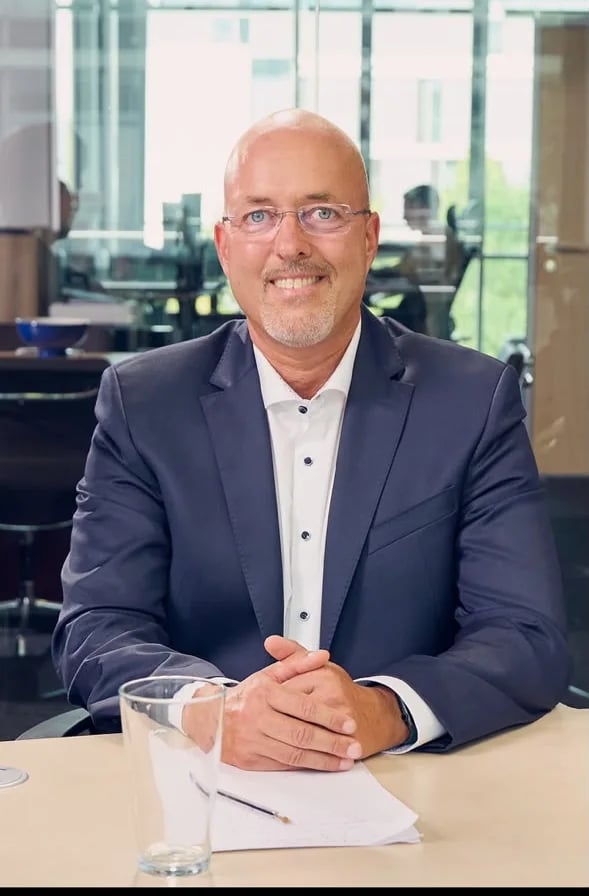
CEO & Founder
Founder and CEO of the firm. Responsible for strategy, international engagements and developing cross-border solutions.
Founder and CEO of the firm. Responsible for strategy, international engagements and developing cross-border solutions. Pascal Verbracken leads the firm and combines personal client support with collaboration across an international network of legal professionals, tax advisers and insolvency specialists. His work centres on complex situations involving personal liabilities, businesses and economic interests across national borders.
His areas of focus include the European Insolvency Regulation and the relocation of the centre of main interests (COMI). He has a particular focus on Irish procedures, including Debt Settlement Arrangements (DSA), Personal Insolvency Arrangements (PIA) and bankruptcy.
Other areas of his work include personal insolvency and debt discharge in Germany, corporate insolvency, directors’ liability and international debt restructuring. Specific legal and tax questions are addressed in cooperation with the responsible qualified professionals.

Cooperation partner | Commercial criminal lawyer
Cooperation partner of the firm and a lawyer specialising in commercial criminal law.
Cooperation partner of the firm and a lawyer specialising in commercial criminal law. For commercial and tax criminal law matters, Kanzlei Verbracken & Partner GmbH cooperates with Legal Defenders Rechtsanwalts Partnerschaftsgesellschaft mbB, based in Witten. René Scheier is a partner of that firm and the contact for this cooperation.
The cooperation is with Legal Defenders as an independent professional partnership entered in the partnership register. Its specialist areas within this cooperation are commercial criminal law and tax criminal law. René Scheier is presented as an external professional partner.

International tax adviser
International tax adviser focusing on cross-border tax matters and international structures.
International tax adviser focusing on cross-border tax matters and international structures. Tobias Jansen contributes his tax expertise as a professional partner of Kanzlei Verbracken & Partner. He assists businesses and self-employed clients with ongoing bookkeeping and the preparation of annual accounts.
He also advises on the tax planning of lifetime transfers in anticipation of inheritance and on the planning and establishment of holding structures. His work connects company structure with long-term wealth succession planning.
His practice also covers out-of-court tax remedies and objection proceedings, as well as representing clients before the fiscal courts.
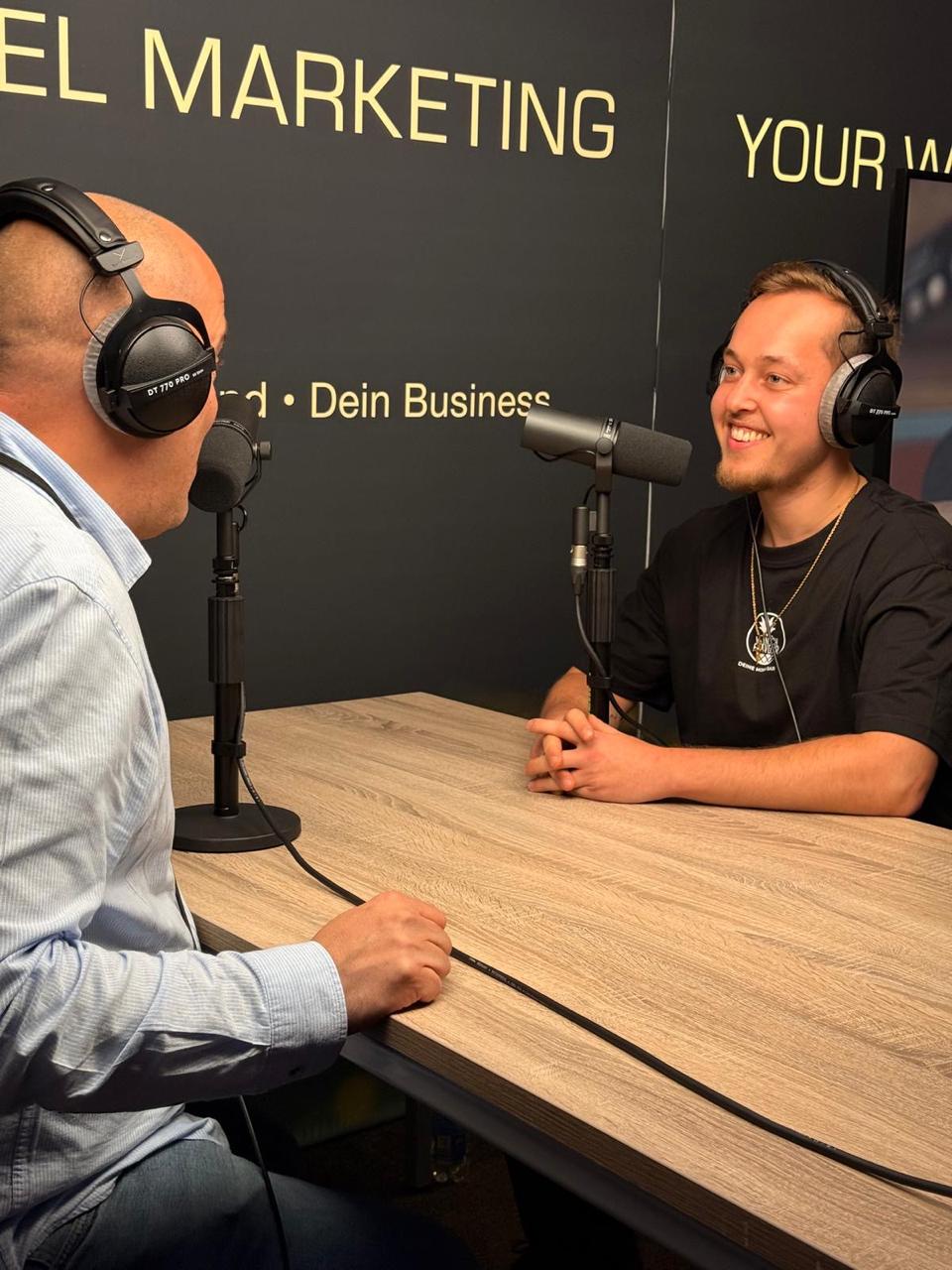
Head of Client Experience & Events
Organises events, service providers and day-to-day operations to deliver a personal and professional client experience.
Nicolai Verbracken is responsible for the overall organisation and delivery of all client-related events and the firm's internal events.
He coordinates all operational aspects of client support with the aim of ensuring a high-quality, professional overall experience. This includes planning and running events, arranging hotel bookings and catering, and managing all relevant service providers.
He also ensures that both clients and employees feel well looked after throughout these activities. His focus is on smooth organisation, high service quality and an excellent public presentation of the firm.

Executive Assistant to the CEO & Head of Client Relations
Connects management and clients, supports the journey from first enquiry to engagement and coordinates internal processes.
Sarah Bakir is the personal assistant to the firm's managing director and founder, Pascal Verbracken, and acts as the central link between management, clients and internal operations.
She is the central contact for client relations and coordinates new client acquisition, from the first enquiry and recording each client's individual situation through to the final engagement. She manages and monitors all relevant stages of the engagement process in an administrative and coordinating capacity.
She also supports the firm's internal operations and ensures that all processes are carried out efficiently, systematically and to a high standard. She coordinates legal questions between clients and the firm's responsible legal professionals.
Working closely with management, she plays a key role in improving internal processes and ensuring professional, service-oriented client support.

Head of International Business Development & Compliance
Supports international markets and partners, coordinates AML and KYC checks and develops tailored brand identities for clients.
Julian Verbracken is responsible for developing and supporting international markets, particularly Ireland and the USA, and serves as the central point of contact for overseas cooperation partners.
He coordinates cooperation with international tax advisers, lawyers and other service providers and supports the operational delivery of cross-border client engagements.
He also plays a significant role in compliance checks, particularly Anti-Money-Laundering (AML) and Know-Your-Customer (KYC), and ensures that all regulatory requirements are met.
Another focus of his work is developing and implementing clients' public-facing identities. He designs tailored corporate identity solutions, including websites, logos, visual design elements and complete brand identities.

Head of Ireland Operations & Client Liaison
Supports clients on the ground in Ireland, coordinates local contacts and manages the firm’s properties.
Dr. Gunter H. Rütter is responsible for all client-related matters on the ground in Ireland and acts as the central contact for all of the firm's clients based there.
He coordinates communication and arrangements between clients, Irish authorities, landlords and other local contacts, ensuring that all on-site processes run smoothly and efficiently.
Whenever a personal presence is required, Dr. Rütter provides direct support and representation for clients in Ireland. His focus is on reliable, solution-oriented and professional handling of all local administrative matters.
He also manages the firm's properties in Ireland and ensures that they are properly organised and used as part of client support.

Junior Legal & Compliance Analyst (Law & Economics)
Supports debt collection administration, AML and KYC checks, Irish property contracts and the maintenance of CRM and process systems.
Natalja Leutgeb works in Law and Economics and supports the firm in various operational and regulatory areas. From summer 2026, she studies law at an Austrian university.
One focus of her work is debt collection administration and Anti-Money-Laundering (AML) and Know-Your-Customer (KYC) checks, in which she gained in-depth experience during an internship at the firm's Cyprus office.
She also works in the Irish property market and assists in reviewing the legal framework of property contracts. She contributes to coordination and communication between estate agents and clients.
Alongside these tasks, she is responsible for maintaining internal systems, particularly CRM and process systems. She regularly checks their functionality and data consistency, identifies irregularities and supports management in improving internal processes.

Senior Insolvency Case Manager & Finance Operations
Prepares insolvency documents for the responsible PIP, coordinates administrative client communication and manages bookkeeping and invoicing processes.
Anke Kraft is responsible for preparing and systematically organising all client insolvency proceedings.
She checks all engagement-related documents for completeness, accuracy and plausibility and handles all preparatory communication with clients concerning the insolvency proceedings. She ensures that all required information and supporting documents are properly recorded and processed. Her role is exclusively preparatory, administrative and coordinating.
She then prepares all documents so that they can be handed to the responsible Personal Insolvency Practitioner (PIP) in complete, review-ready form for further processing and submission to the court. Legal assessments and decisions are made by the respective responsible legal professionals or parties to the proceedings.
Anke is also responsible for internal bookkeeping and ensures proper invoice processing. This includes both incoming and outgoing invoices as well as monitoring and structuring the firm's financial processes.
Alongside these tasks, she supports management in operational matters and plays a key role in ensuring efficient internal processes.

Head of Tax Advisory & Payroll Services
Advises clients in Ireland on domestic and international tax structures and handles payroll, payslips and tax requirements.
Michael Green works as a tax adviser in Ireland and provides comprehensive support to the firm's clients in all tax matters.
He advises on domestic and international tax structures, particularly company structures and cross-border matters, and assists clients in optimising the tax arrangements of their business and shareholding structures.
He also manages payroll, including preparing payslips and ensuring compliance with all payroll tax and social security requirements.
Through his extensive contacts in Ireland and the United Kingdom, he has a strong network that is used to resolve complex tax questions efficiently and support international client engagements.
Attorney-at-Law (Cyprus) & Corporate Legal Advisor
Professional partner for civil and criminal matters in Cyprus, court representation, corporate legal advice and limited company formation.
Cooperation partner Andria Panagiotou practises as a lawyer in the Republic of Cyprus and provides comprehensive local support to the firm's clients in civil and criminal matters.
She regularly represents clients before Cypriot courts and handles litigation in judicial proceedings. She also acts as a legal adviser to clients on all local matters and ensures professional support within the Cypriot legal system.
Another focus of her work is corporate legal advice and company formation. She plays a significant role in structuring and establishing Cypriot limited companies and works closely with the firm's international cooperation partners.
Experiences that offer perspective
Daniel Lerchner shares his financial challenges, the firm’s support and his new life in Ireland. The insolvency proceedings were still ahead at the time of the interview. Video in German.
„Kann die Kanlzei Verbracken & Partner nur empfehlen. Wer kompetente, fachgerechte und professionelle Beratung benötigt ist hier genau richtig.“„Ich bin sehr zufrieden! Das Team ist wirklich sehr kompetent und Hilfsbereit. Definitiv zu empfehlen!“„Ich habe sehr gute Erfahrungen mit der Kanzlei Verbracken & Partner gemacht.“Listen in
New perspectives to listen to. In three short radio features, Pascal Verbracken discusses insolvency in Ireland and personal liability risks for company directors.

Pascal Verbracken discusses the insolvency process in Ireland and personal guidance for clients.
Original recording in German
The questions directors face when dealing with personal debts and why Ireland is part of the discussion.
Original recording in German
Personal assets, business risks and the importance of seeking professional support early.
Original recording in German
YouTube · Kanzlei Verbracken
Explanations and answers on insolvency, liability and international structures. Videos in German.
 COMI · 2:56
What does COMI mean? This video explains the centre of main interests and its significance for EU insolvency proceedings.
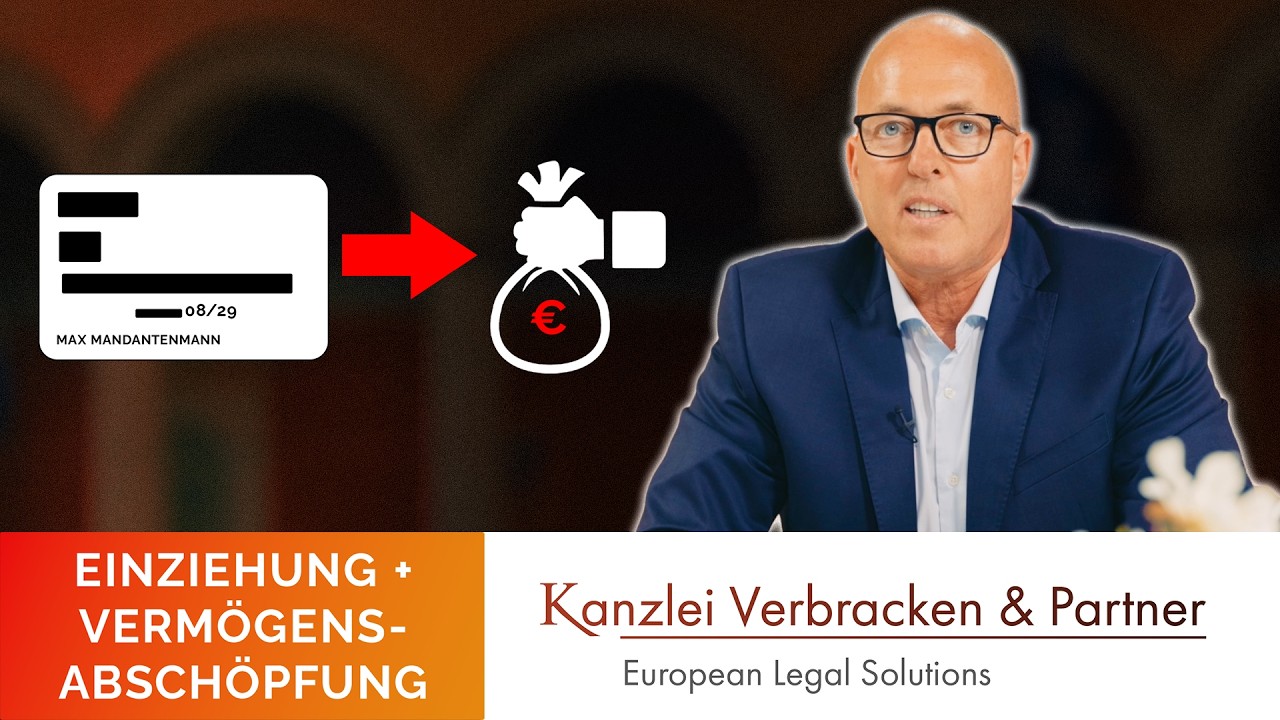 Confiscation · 6:06
René Scheier explains confiscation and asset recovery. The video also discusses the role of Irish insolvency, the procedure’s duration and recognition within the EU.
 Recognition · 5:45
This video focuses on recognition of Irish insolvency proceedings in other EU countries.
 Switzerland · 1:35
Pascal Verbracken discusses over-indebtedness from the perspective of Swiss citizens.
 TCSP · 3:31
This video introduces TCSP certification and its significance for the firm’s work in Ireland.
 Ireland · 8:20
An overview of the insolvency process in Ireland, providing orientation before a personal consultation.
Your path
Organise everyday finances and documents.
Develop professional or entrepreneurial perspectives.
Plan ahead and maintain long-term direction.
FAQ
Initial information cannot replace a personal conversation.
52 / 52 questions
By EU insolvency, we mean the possibility of conducting insolvency proceedings in another EU member state when your actual centre of main interests (COMI) is located there.
The differences between European insolvency systems can be substantial: procedural duration, discharge of debts, treatment of particular debt categories, income and assets are sometimes governed very differently.
Our aim is therefore to identify the European procedure suited to your personal situation.
No. That is precisely what we assess for you.
We consider your personal living and working circumstances, liabilities, income and assets, as well as possible personal liability risks. In the initial consultation, we then clarify which country and procedure could offer the greatest advantages for your situation.
COMI stands for “Centre of Main Interests”.
COMI generally determines which EU country has international jurisdiction to open main insolvency proceedings. A registered address alone is not decisive: what matters is where your actual centre of personal or economic interests is located and whether this is ascertainable by third parties. The EU Insolvency Regulation sets out different presumptions and specific periods, particularly following a relocation.
Yes. In principle, you can continue working as an employee or in self-employment.
However, the rules differ substantially between countries. Germany, for example, imposes a statutory obligation to pursue gainful employment during the relevant discharge phase.
In Ireland, the focus is particularly on the income actually available after reasonable living expenses have been taken into account. Especially for entrepreneurs and higher earners, we therefore carefully assess which system best suits their personal financial circumstances.
Acting as a director or participating in company management during Irish bankruptcy is subject to specific restrictions and may require prior court permission.
Assets must generally be disclosed fully and transparently in insolvency proceedings. These include property, vehicles, accounts, shareholdings and other assets.
Tax liabilities can also be covered by a discharge. Particularly with income tax, VAT, trade tax and other business tax liabilities, choosing the right insolvency system can therefore be highly significant.
Ireland may also be an interesting option for complex tax claims. We assess individually whether a particular tax claim, especially one involving criminal tax matters, is actually covered by discharge.
This depends largely on the country chosen.
In Germany, the statutory assignment period is generally three years from the opening of insolvency proceedings. Preparation and filing take place beforehand.
Ireland is considerably faster: Irish bankruptcy generally provides for automatic discharge after one year. The necessary preparation is additional, particularly the actual establishment of the requirements for Irish jurisdiction in a cross-border case.
This substantial time saving can make Ireland a particularly interesting alternative.
It is straightforward: call us, send us an email or book a free initial consultation directly.
During the first conversation, we gain an overview of your situation and can already assess which insolvency routes may be available to you and which could be particularly relevant.
Personal insolvency focuses on the individual and relief from their personal debts.
Corporate insolvency initially focuses on the financial situation of a company or business. For entrepreneurs, both levels often need to be considered together: company debts, personal guarantees, directors’ liability, tax claims and private liabilities.
For entrepreneurs, we therefore assess not only insolvency but their entire personal liability situation.
Yes. EU insolvency is a regular statutory insolvency procedure.
The European Insolvency Regulation expressly governs which court has jurisdiction in cross-border cases. If the actual COMI is in Ireland and the other requirements are met, the Irish court may have jurisdiction over the main insolvency proceedings.
An actual, demonstrable COMI is always essential. A mere registered address or sham residence is insufficient.
Yes - and this is one of the key advantages of European insolvency law.
Article 19 of the European Insolvency Regulation provides for recognition in other member states of the opening of insolvency proceedings by a court with jurisdiction under Article 3. Under Article 20, main proceedings generally have the same effects there as in the opening state, without further formalities, unless the Regulation provides otherwise.
This means that properly opened Irish EU insolvency proceedings do not stop at the German or Austrian border.
Yes. That is precisely why the question should not only be whether to file for insolvency, but where and how.
If liabilities can no longer be paid in full on a sustainable basis, insolvency proceedings can be an economically sensible route to a fresh start. The available lawful options should then be compared.
Why spend three or five years in proceedings if a substantially faster European route is available, subject to the relevant requirements?
We therefore compare duration, debt categories, income, assets, personal liability risks and discharge, and develop the appropriate strategy from that assessment.
Ireland offers several substantial advantages in a European comparison:
Discharge normally after just 12 months, no rigid German-style attachment table, and a system that takes the debtor’s actual reasonable living expenses into account.
Irish insolvency law can also offer possibilities for tort claims and claims with a criminal-law background that are unavailable or more limited elsewhere. We assess in advance whether a particular claim is actually covered by discharge.
The procedure also offers considerable occupational flexibility. Employment, self-employment or entrepreneurial activity is generally possible.
The combination of a short procedure, a flexible income assessment and broad debt-relief possibilities makes Ireland particularly interesting for many of our clients.
Acting as a director or participating in company management during Irish bankruptcy is subject to specific restrictions and may require prior court permission.
Normally exactly 12 months. This is followed by automatic discharge. On application, the Official Assignee issues a Certificate of Discharge.
Income is a particular consideration: if there is an attachable income surplus, an Income Payment Agreement or Income Payment Order may provide for payments for up to three years.
This generally does not change the fact that discharge takes place after 12 months. Income payments may simply continue beyond that date.
Discharge after one year, even if an income agreement lasts longer. Without a surplus, there are no income payments.
Statutory exceptions remain: in particular, failure to cooperate or undisclosed income and assets can delay discharge.
The Official Assignee is the central statutory office responsible for administering Irish bankruptcy. After proceedings open, the Official Assignee takes over insolvency administration, particularly the handling of the bankruptcy estate.
A particular feature of the Irish procedure is that the Official Assignee does not have to contact every creditor individually in every situation.
The information and publication duties in a particular case are governed by Irish insolvency law and, for creditors in other EU member states, additionally by the European Insolvency Regulation.
For the debtor, the main point is that insolvency administration is handled centrally through the Official Assignee after proceedings open.
Yes. Irish insolvency proceedings are publicly accessible.
However, this does not mean that insolvency automatically appears prominently in search engines when someone makes an ordinary name search. Researching an Irish bankruptcy generally requires a targeted search of the relevant Irish registers or court sources.
The procedure is public, but an insolvency register entry is not the same as an ordinary online article prominently displayed on Google.
For EU main insolvency proceedings, the decisive question is where your Centre of Main Interests (COMI) is actually located.
This is not determined simply by counting how many days you spent in a country. What matters is an overall assessment of your actual personal and economic circumstances, which must also be ascertainable by third parties.
A mere registered address is therefore insufficient. Equally, there is no general rule that you must sleep in Ireland for at least a fixed number of days per year that, on its own, determines COMI.
We therefore do not plan days of attendance; we establish a genuine and demonstrable basis for your COMI.
The overall picture is decisive, rather than a single document.
Relevant factors may include an actual residential address and proper tenancy agreement, employment or self-employment, an Irish company of your own, tax and social insurance connections, banking and telephone arrangements, and other actual links to Ireland.
Everyday life can also play a role, such as a gym, golf club, associations or other regular local activities.
The more coherent the overall picture, the more clearly an actual COMI can be documented.
Yes. Family ties in the previous country of residence do not automatically rule out COMI in another EU country.
International insolvency jurisdiction depends on an overall assessment of actual circumstances. Occupational and economic activities, housing, administration of personal interests and family relationships may provide different connecting factors.
Especially when the family continues to live in Germany, Austria or Switzerland, COMI must therefore be genuinely established and particularly clearly demonstrated in the destination country.
A family remaining in the home country does not automatically rule out EU insolvency in Ireland.
We do not merely explain what you need; we support you in actually establishing your circumstances in Ireland.
Depending on your personal situation, this may include housing and a tenancy agreement, an Irish PPS Number, banking and telephone arrangements, occupational activity, forming an Irish limited company or starting self-employment, and other actual connections to Ireland.
Integration into everyday life, for example through a gym, golf club, associations or other regular activities, can also form part of a coherent overall situation.
From preparing your COMI through insolvency proceedings to discharge, we accompany you throughout the process.
Yes. People from Switzerland or with debts in Switzerland can also benefit from EU insolvency and a European discharge. Changes in the legal framework have made this possible.
The requirements for insolvency proceedings in the relevant EU member state must actually be met.
The effects of foreign insolvency proceedings in Switzerland require recognition under Swiss law. Unlike within the EU, recognition is not automatic but is governed by a recognition procedure.
Yes. Claims of Swiss banks, companies, authorities or other Swiss creditors can in principle be included in foreign insolvency and debt-relief proceedings.
Since Switzerland is not an EU member, a distinction must be made between the effects of discharge in the opening state and its recognition or enforcement in Switzerland.
No. This is a key difference from insolvency proceedings in countries such as Germany or Ireland.
After Swiss personal bankruptcy, unpaid claims can generally remain as bankruptcy certificates of loss. Personal bankruptcy therefore does not automatically lead to the discharge available in other European legal systems.
This is precisely why it can make sense for heavily indebted people in Switzerland to consider EU insolvency options.
No. Nationality generally does not determine which country has jurisdiction over insolvency proceedings.
What matters is the actual personal and economic situation and the international jurisdiction of the relevant insolvency court. COMI, living and working circumstances, economic activities and the origin or structure of liabilities are particularly relevant.
A Swiss citizen can therefore in principle undergo EU insolvency proceedings if the relevant requirements in the destination country are met.
Obligations under personal guarantees can in principle also be covered by discharge.
It is particularly important when and on what basis the personal obligation arose. A guarantee being called upon later does not automatically make it a new obligation arising only after insolvency proceedings opened.
Entrepreneurs and directors often have substantial personal guarantees for company loans, leasing, property or working-capital financing. These must therefore be included in the debt-relief strategy from the outset.
For entrepreneurs, looking only at the company’s debts is insufficient. The decisive question is:
Which claims are being asserted personally against the director or shareholder?
These include directors’ liability, tax liability, personal guarantees and tort claims.
The legal basis of the personal claim is then particularly important. In Germany, certain claims, particularly those arising from intentional torts, survive discharge under section 302 InsO.
In Ireland, such claims may also be covered by discharge. Whether this applies in a particular case depends on the legal basis and Irish exclusion rules and is assessed individually.
Not every claim is automatically covered by discharge. The exceptions depend on the country and procedure.
In Irish bankruptcy, criminal fines and family-law maintenance obligations in particular require separate consideration; they are not eliminated by discharge.
In Germany, section 302 InsO excludes, among other things, criminal fines and statutory maintenance intentionally withheld in breach of duty. Child maintenance arrears are therefore not categorically excluded from discharge in every German case. Ongoing maintenance obligations continue.
A forgotten creditor does not automatically mean their claim is excluded from German discharge. Section 301 InsO expressly provides that discharge generally also affects insolvency creditors who did not register their claims.
This does not, of course, permit deliberate concealment of creditors. Intentionally or grossly negligently incorrect or incomplete information can jeopardise discharge.
In Irish proceedings, it also matters whether the claim is covered by bankruptcy at all and why it was not disclosed.
Our principle is clear: record all known creditors fully and immediately assess how to handle claims discovered later.
This is one of the largest differences between European insolvency systems.
Germany uses statutory attachment allowances and an attachment table. Your actual personal living costs are therefore not automatically decisive.
Ireland takes a different approach: reasonable living expenses (RLE) are considered in light of personal and family circumstances.
Housing costs, family, childcare and other reasonable expenses can therefore play a significant role.
This can make a substantial difference, particularly for debtors with higher incomes and corresponding actual living costs.
All assets must be fully disclosed. These include property, vehicles, accounts, shareholdings and assets abroad.
In Irish bankruptcy, relevant assets generally vest in the Official Assignee, who then assesses whether and how realisation is economically worthwhile.
For property, for example, the actual net asset value after mortgages and other charges is important. A heavily mortgaged property or one in negative equity can be economically very different from an unencumbered property.
Special Irish rules and time limits also apply to the family home.
Insolvency therefore does not automatically mean that every home or vehicle will be sold. Value, encumbrances and the specific legal situation are decisive.
Yes. Company shares, property, accounts, holdings and other assets must be disclosed regardless of the country in which they are located.
Assets abroad do not disappear from insolvency proceedings simply because they are outside the insolvency state.
A clear and complete asset inventory is therefore part of any sound insolvency preparation.
Yes. An economic fresh start is one of the main purposes of discharge.
After proceedings conclude, self-employment or entrepreneurial activity can generally be started or continued, provided no independent professional or company-law restrictions prevent it.
Irish insolvency law in particular is strongly shaped by the idea of a fresh start:
Close the chapter on old liabilities. Regain economic freedom to act. Start again.
Alongside our fee, EU insolvency planning should consider the actual costs of living and establishing yourself in the destination country.
These may include housing and utilities, travel, insurance, transport and ongoing living expenses. Running your own Irish limited company, for example, may also involve costs for the company, tax adviser, annual accounts, office, social contributions and other operating expenses.
The costs of actual local integration, such as a gym, golf club, associations or a vehicle, can also form part of personal planning.
We therefore consider not only the costs of insolvency proceedings but calculate the entire route to discharge with you.
Our services are clearly and transparently defined from the outset.
Before we begin, you receive a detailed service agreement setting out which services are included in your personal package and their costs.
Our packages are deliberately comprehensive and, depending on the package selected, can cover a large part of the preparation, organisation and support on the way to insolvency proceedings.
Clear services. Clear costs. No unpleasant surprises.
You do not initially need to prepare extensive documentation. Throughout the engagement, we guide you step by step and tell you which documents and information we need at each stage.
As the process progresses, we particularly need details of your creditors, reference numbers, claim amounts and legal bases. Depending on your circumstances, this may also include tax assessments, bank statements, details of assets and company shareholdings, and maintenance obligations.
If you are or were an entrepreneur or director of a corporation, additional company and tax documents may be required.
Our experienced team supports you throughout the entire process.
The Premium package includes a personal contact for overall support and a personal contact on the ground in Ireland or the relevant destination country. You therefore have dedicated contacts for both preparation and practical local implementation.
Outside the Premium package, experienced members of our team also support you. We aim for you to work regularly with the same two or three people who know your case and its particular circumstances.
Personal case support from a team that knows your situation and accompanies you throughout the process.
We treat your personal and financial data with the highest level of confidentiality.
Documents and case files are stored in a protected private cloud on appropriately secured servers and processed in accordance with data-protection requirements. Access is restricted to the people required to handle your case.
Protecting your data is a top priority, especially sensitive information about assets, debts, taxes, businesses and personal circumstances.
Confidentiality and data security are integral to our professional client support.
The standard assignment period is three years from opening. The good-conduct phase does not add a fourth year. Advice, settlement attempts and filing come beforehand. Certain repeat proceedings have a five-year period; eligibility to apply again requires separate assessment.
From 1 July 2026, the monthly basic amount is €1,587.40. Qualifying statutory maintenance adds €597.42 for the first person and €332.83 for each of the second to fifth persons. Adjusted net income and the attachment table determine the deduction. Earnings above the allowance are not automatically taken in full.
Yes. Following personal advice, a qualified person or body must certify that an out-of-court debt settlement plan failed within the six months before filing. This is not a six-month waiting period. Lists of creditors, claims, income and assets are also required.
Currently self-employed people generally use regular insolvency. Formerly self-employed people may use consumer insolvency if they have fewer than 20 creditors at filing and no claims arising from employment relationships. Individuals can also request discharge in regular insolvency.
Section 302 InsO excludes, among other things, criminal fines, intentional tort liabilities and statutory maintenance intentionally withheld in breach of duty. Tax debts are excluded when connected with a final conviction under sections 370, 373 or 374 AO. Ordinary tax arrears are therefore not automatically excluded; the creditor’s filing also matters.
Individuals requesting discharge may apply to defer procedural costs if their assets are insufficient. The court checks eligibility. Deferral postpones payment; it is not automatic cancellation. It does not generally cover a privately agreed advisory fee.
There is no single total for everyone. Zurich’s guidelines give a basic amount of CHF 1,200 for someone living alone and CHF 1,700 jointly for a married couple. Recognised housing, compulsory health insurance and necessary work expenses are added. Household circumstances, evidence and cantonal practice determine the calculation.
If enforcement resumes for a pre-bankruptcy claim, the debtor may expressly raise lack of new assets in the objection to the payment order. The court considers savings and income from which assets could have been accumulated. This protection does not cover new debts.
As of 10 September 2026, the Federal Office of Justice says the new restructuring procedures cannot yet be used. A transition period is needed for cantonal implementation before commencement. Until then, personal bankruptcy must not be presented as automatic discharge. No commencement date is assumed here.
The temporary three-year repayment-plan rules for consumers expired at the end of 16 July 2026. Transitional protection covers relevant applications received by the court before 17 July 2026. New consumer cases generally face five years of assignment under the levy plan; payment agreements and rules for entrepreneurs require separate assessment.
In 2026, Spain’s minimum wage is €1,221 monthly with 14 payments, or €17,094 annually. Article 607 LEC generally protects income up to the relevant minimum wage, with graduated deductions above it. Twelve-payment arrangements and extra payments require adjustment. The monthly figure is not a universal net-income threshold.
The Latvian insolvency authority states a minimum creditor payment of €260 monthly during discharge from January 2026: one third of the €780 minimum wage. An initial €1,560 deposit covers administrator remuneration. These figures are neither a total price nor necessarily your full monthly payment.
On 20 January 2025, the court upheld recognition of the Irish opening decision. German recognition proceedings do not allow a fresh review of Irish jurisdiction. Objections generally belong before the opening court. This concerns opening proceedings, not discharge, and does not authorise false statements.
Yes. In its judgment of 23 February 2024, the Düsseldorf Fiscal Court recognised the extinction of the tax claims concerned through Irish discharge. Missing individual notification did not prevent recognition in the particular circumstances. This is not a blanket waiver of all taxes; claims, procedure and exceptions require review.
Recognition may be refused where its outcome is manifestly incompatible with fundamental public-policy principles. In 2015, the BGH stressed mutual trust: jurisdictional objections generally belong in the opening state. The case concerned England under the former EU Insolvency Regulation, not new British applications today.
The Koblenz court did not regard a genuine relocation for more favourable insolvency conditions as a public-policy breach in itself. A fictitious address is insufficient. Its preliminary ruling concerned an English case predating the end of 2020; current eligibility and COMI requirements still need separate assessment.

Let us look at your options together.
Our offices